


Golf Rising Star : Career Sim
4.650.00 Reviews
App Specs
- Version
- 1.5.4
- Updated On
- License
- Free
- Downloads
- 50,000+
- Developer
- NovaLevel Co., Limited
- Categories
- Sports
- Platform
- Android
Screenshots





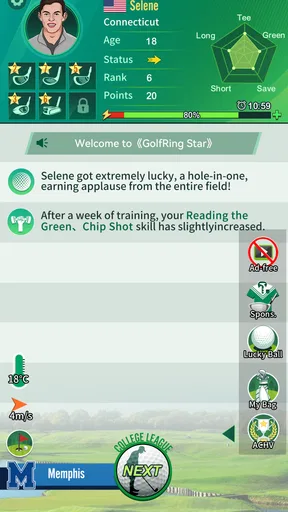
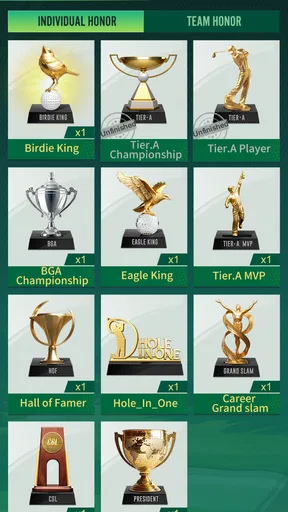
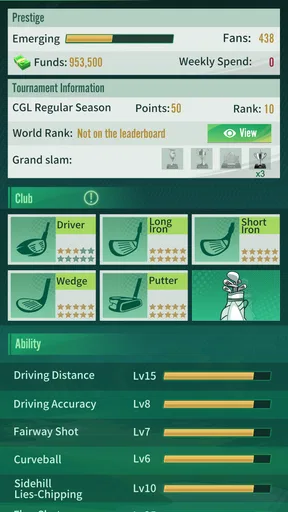
 Analysis by AppCompare
I went into Golf Rising Star: Career Sim expecting a light sports game, and that is exactly where it fits best. This is a golf career simulation from NovaLevel Co., Limited, built around the appeal of developing a player and gradually chasing a place among the sport’s best. It is not trying to replace a full console golf game with precise swing physics. Instead, it gives me a calmer, more management-focused way to enjoy golf in short sessions.
That distinction matters. If you want detailed club selection, realistic wind calculations, and direct control over every shot, this may feel too simple. If you like watching a golfer improve, making sensible choices, and returning to a career over time, the format is much easier to appreciate. I found it most enjoyable when I treated it as a relaxed progression game rather than a serious golf simulator.
The game is free to download and carries an Everyone content rating, which makes it approachable for a broad audience. Its average score sits at 4.6 from around 1.4 thousand ratings, while the listing shows more than 50 thousand installs. Those figures suggest that the concept has found a receptive audience, but they do not change the central question: whether its slower career-simulation style matches the way you want to play.
How the career loop feels in everyday play
My usual starting point was simple: open the game, check what my golfer could work toward, make the most useful improvement available, and then continue through the current career activity. That routine gives the game its relaxing quality. I was not required to sit through a long match every time I picked up my phone, and I could approach progress in small pieces rather than planning an entire evening around it.
This makes the game a good companion for ordinary gaps in the day. I can imagine playing it during a commute, while waiting for an appointment, or after dinner when I want something more engaging than scrolling but less demanding than a competitive action game. The career structure gives those short visits a reason to exist: even a brief session can feel like part of a longer golfing journey.
The important habit is to avoid spending improvements impulsively. Early progress can make every upgrade look equally attractive, but a more experienced approach is to decide what kind of golfer you want to build before committing resources. A broadly useful player may be safer than one built around a single strength, especially when the game starts asking for more than one type of performance. I found that thinking one step ahead made the progression feel more deliberate.
That does not mean the game becomes complicated. Its appeal is still based on accessibility. The decisions are easier to understand than the systems in a deep golf management title, and the presentation keeps the mood gentle. However, simple controls do not remove the need for priorities. The best results came from treating each choice as part of a repeatable plan instead of tapping whatever option was immediately available.
Worth Reading Before You Choose

EA SPORTS FC Mobile 26 Is a Bigger Football Game, but It Takes Time

Flipboard Shows What News Apps Must Do Beyond the Feed

Switching to Android Auto Means Rethinking Your Driving Routine

Google Calendar Makes a Crowded Week Easier to Manage

Ludo King Makes the Most of the Minutes Between Plans

Baby Panda World Brings Quick Play to Modern Phones, but Its Game Library Feels Busy
What I would do during a short session
My preferred routine was to begin by checking the current objective or progression target rather than immediately spending anything. That small pause helped me avoid improving a category that did not support my next goal. I would then complete the available activity, review the result, and only afterward decide whether the reward justified an upgrade. This order is more efficient than making a purchase first and discovering later that it did little for the task in front of me.
For a casual player, the most useful mindset is consistency. You do not need to optimize every action to enjoy the game, but repeating the same sensible sequence reduces wasted decisions. Check the goal, play the available content, review the outcome, and then upgrade with a reason. That workflow also makes it easier to tell whether a setback came from a weak golfer, an unsuitable choice, or simply a target that needs more gradual progress.
I also recommend keeping expectations realistic about the word “career.” The game presents a long-term sporting ambition, but it remains a mobile simulation designed for convenient play. It is better at giving you a feeling of gradual advancement than at reproducing every part of professional golf. Players who enjoy incremental development will understand its rhythm quickly; players looking for a complete tournament environment may want something more detailed.
Settings and small choices worth checking
There are no settings I would treat as a magic shortcut to success. The useful approach is to check the available options when you first install the game, make the interface comfortable for your device, and then leave distractions out of the way. A clean, readable layout matters more here than constant adjustments because the game’s value comes from its career loop, not from complicated control tuning.
I would also pay attention to how the game handles notifications and interruptions on your phone. A career simulator can become annoying if it repeatedly pulls you back when you are not in the mood to play. Keeping the experience on your schedule makes it feel more relaxing. This is not a gameplay exploit; it is a practical way to protect the calm tone that the game is aiming for.
Another useful check is the purchase screen. The game is free, but it includes optional in-app purchases ranging from $1.99 to $99.99 per item. I would not make a purchase simply because progress feels slow in one session. First, I would close the screen, play again later, and see whether the obstacle is genuinely persistent. That habit is especially important in a progression game, where impatience can make an optional purchase seem more necessary than it really is.
For younger players or shared devices, the Everyone rating makes the game easier to consider, but I would still keep purchase controls in mind. The age rating describes the content, not the spending habits of every person using the phone. Setting boundaries before handing the device over is more sensible than trying to solve an accidental purchase afterward.
The current version is 1.5.3, and the minimum operating-system requirement is Android 7.1. That makes the game accessible to many older Android phones, although actual comfort will still depend on the device’s screen, performance, and battery condition. On a smaller display, I would favor shorter sessions because repeated menus and progression checks can feel less comfortable than they do on a larger screen.
Repeatable habits that make progress feel cleaner
The fastest pattern I found was not frantic tapping. It was reducing unnecessary decisions. Before playing, I chose one immediate objective. During the session, I avoided changing direction every time a new option appeared. Afterward, I reviewed the result before spending anything. This approach kept the career moving without turning the game into a spreadsheet.
A second useful habit is separating “progress” from “reward.” Receiving something does not automatically mean it should be used immediately. Sometimes the smarter move is to wait until the next objective gives the reward a clear purpose. That delay can feel less exciting, but it prevents the common mobile-game mistake of improving whatever is most visible instead of what is most useful.
I also found it helpful to use the game as a routine rather than a challenge to finish in one sitting. A short daily check-in, when convenient, is more compatible with its relaxed design than a long push to force rapid advancement. This is particularly valuable for players who enjoy seeing a character develop over time but do not want the pressure of ranked competition or real-time opponents.
When progress slows, I would change only one variable at a time. Improve one area, play again, and see whether the result changes. If you alter several things simultaneously, it becomes difficult to understand what actually helped. This simple testing habit gives the simulation more depth and keeps the player involved in the reasoning behind the career.
There is also a trade-off between specialization and flexibility. Focusing heavily on one strength can make a particular objective feel easier, but it may leave the golfer less comfortable when the demands change. A balanced approach is slower to show dramatic results, yet it is less likely to create a wall when the game asks for broader performance. I would choose specialization only when the next goal clearly rewards it.
Where the simulation reaches its limits
The biggest limitation is that the game’s relaxing design can also make it feel repetitive. Once the basic career rhythm is familiar, players who need constant mechanical variety may find the experience too restrained. The game is built for gradual improvement and accessible sessions, not for the endless tactical detail of a full golf simulator.
That means it is not my first recommendation for someone who wants to practice real golfing decisions. A dedicated golf game with direct shot control is a better choice if you care about reading lies, selecting clubs, shaping shots, or reacting to weather. Likewise, a competitive multiplayer title will suit you better if the main attraction is beating other people rather than developing a personal career.
The progression model can also test your patience. A calm game still needs a satisfying sense of movement, and anyone who expects every session to deliver a noticeable breakthrough may become frustrated. My solution was to judge progress over several visits instead of one. If you need immediate rewards every time you play, the slower structure may not be a good match.
The free-to-play format deserves a careful look for the same reason. Optional purchases can be convenient, but convenience is not the same as value. I would only consider paying if I had already decided that I enjoyed the core loop and wanted to support or extend that experience. I would not use spending to compensate for choosing an upgrade without a plan.
There is a further limit for experienced sports-game players: the career fantasy may be more important than simulation accuracy. The game asks you to enjoy the idea of rising as a golfer, but it does not need to reproduce every professional detail to deliver that feeling. If authenticity is your priority, you may notice the simplification quickly. If mood and progression matter more, the same simplicity becomes an advantage.
Who should install it, and who should skip it?
I would recommend it to someone who wants a low-pressure golf career game with a clear sense of development. It suits players who like checking in regularly, making small improvements, and watching a virtual athlete move toward bigger ambitions. It is also a reasonable choice for families and casual players who prefer an Everyone-rated sports experience over something intense or competitive.
I would be more cautious about recommending it to golfers searching for a training tool. The career format can encourage strategic thinking, but it should not be confused with real-world instruction. It is entertainment first. A player who wants authentic swing practice, technical feedback, or a detailed course simulation will probably be happier with a different type of golf app.
I would also skip it if you dislike progression systems that ask for patience. The game’s strongest quality is its gentle pace, and that is exactly what will bother people who want constant action. Similarly, if you are uncomfortable with free-to-play stores, you should decide in advance that the core experience must stand on its own before you spend anything.
My verdict after settling into the routine
Golf Rising Star: Career Sim works because it understands its scale. It offers a compact, approachable way to enjoy the fantasy of becoming a better golfer without demanding the concentration of a full sports simulation. I liked it most when I played in short sessions, kept a clear upgrade priority, and allowed the career to develop gradually.
NovaLevel Co., Limited has positioned this as a relaxing sports game rather than a technical showcase, and that makes the experience easy to recommend to the right person. The free entry point lowers the risk of trying it, while the optional purchase range means I would still approach the store carefully and keep spending under control.
My final advice is straightforward: install it if you want a calm, goal-driven golf game that fits around your day. Give it a fair trial using a repeatable routine instead of rushing through upgrades. If you are looking for precise golf mechanics, deep tournament strategy, or direct competition, choose a more specialized alternative. For everyone else, the best way to enjoy this game is to treat patience as part of the strategy, not as a problem to buy your way around.
Pros
- Simple controls make it easy for beginners to enjoy each round.
- Career progression gives matches a clear sense of purpose.
- Short sessions fit well into quick breaks or commutes.
- Golf-themed visuals are colorful and easy to follow.
- Upgrades add variety as your golfer improves over time.
Cons
- Energy or waiting systems may limit how often you can play.
- Later courses can feel repetitive without major gameplay changes.
- Some upgrades may require significant grinding to unlock.
- The game may feel less satisfying for players seeking realistic golf.
- Ads or optional purchases can interrupt the otherwise casual experience.
FAQs for Golf Rising Star : Career Sim
What is Golf Rising Star: Career Sim?
Golf Rising Star: Career Sim is a mobile golf management and career simulation game in which you guide a rising golfer from early competitions toward professional success. Instead of focusing only on real-time shots, the game combines career progression, training, tournament participation, equipment improvements, and strategic decisions. Your results depend on how effectively you develop the character and manage each stage of the golfing journey.
How does the gameplay and career progression work?
The main experience revolves around building a golfer’s career over time. Players typically enter events, improve relevant abilities, earn rewards, and unlock stronger opportunities as their performance develops. Training and upgrades are important because later competitions become more demanding. The game is best suited to players who enjoy gradual progression and planning, since success comes from consistently improving the golfer rather than relying on a single match.
Is Golf Rising Star: Career Sim free to download and play?
Golf Rising Star: Career Sim can generally be downloaded without an upfront purchase, but the exact monetization model may vary depending on the platform and version available in your region. Like many mobile career games, it may include optional in-app purchases, advertisements, or limited resources that can speed up progress. Before downloading, check the store listing for current pricing, in-app purchase details, and age requirements.
Does the game require an internet connection?
An internet connection may be needed for certain features, including downloading updates, synchronizing progress, displaying advertisements, accessing online services, or processing purchases. Some career activities may work when the device is offline, but this should not be assumed for every mode or version. If uninterrupted offline play is important to you, verify the current store description and test the game after installation before relying on it during travel.
Is Golf Rising Star: Career Sim suitable for casual players?
Yes, the game can appeal to casual players who like sports simulations with simple progression and short sessions. You do not need advanced knowledge of real-world golf to understand the basic career structure, although players who enjoy optimizing training, selecting upgrades, and planning tournament progress will likely get more out of it. Keep in mind that free versions may include advertisements, timers, or resource limits that affect the pace of play.


